
Natural Wetland Water Features
The wetland water landscape centers on natural ecology, featuring meandering shallow streams and pebble‑lined banks, complemented by wooden arch bridges and colorful, translucent canopy structures. A log‑crafted leisure trail encircles the lake, punctuated along its route by whimsical little wooden cabins and clusters of lush greenery. Recreating the native wetland environment, the space serves as an outdoor water‑learning classroom, where young children can splash and observe, stroll through the woods, and, in close contact with water and soil, uncover nature’s secrets and cultivate a spirit of exploration.
The space is divided into a creative art zone and a physical‑development area: a cartoon‑themed outdoor chalkboard wall and a log‑style art cabin form an open-air studio, offering young children a free‑form space for doodling and artistic creation. Adjacent to this, the physical‑activity zone features a variety of climbing and suspension play structures, set within a spacious, verdant setting where children can unleash their artistic imagination while engaging in running and jumping exercises, fostering the simultaneous development of aesthetic appreciation and physical fitness.
The nature‑observation area features native greenery, with curved shade canopies, a log‑built insect‑watching hut, and plant‑education display stands. A natural stone‑paved path weaves through the flowers and foliage. Drawing on the site’s rich vegetation, it creates an immersive outdoor classroom, encouraging young children to observe insect behavior, identify various plants, and gain hands‑on knowledge of nature—fostering a love for the natural world.
The outdoor nature‑based planting area is designed around native vegetation, complemented by rustic tree‑trunk trellises, whimsical log cabins, and neatly arranged flowerbeds, while also offering amenities for water play and nature exploration. Centered on hands‑on agricultural activities, it guides young children through sowing, watering, and caring for crops, allowing them to witness the entire lifecycle of plants—from germination to maturity—while gaining a tangible understanding of natural science. Through an immersive rural experience, this space fosters curiosity and cultivates environmental awareness.
The Light-and-Shadow Art Observation Deck features a double‑layered, ring‑shaped spiral structure, with a façade adorned by colorful, translucent circular windows. By harnessing the interplay of natural light throughout the day, it creates ever‑changing patterns of shadow and illumination, offering young children a vantage point to climb, enjoy the view, and explore optical phenomena. Surrounded by lush greenery, the space is thoughtfully arranged with rustic wooden fairy‑tale cottages and an organic gravel courtyard, creating an open‑air setting for imaginative role‑play and real‑world interaction. This design fosters scientific curiosity, artistic appreciation, and social development.
Mengzhong Qu Le Yuan creates a large-scale, non‑motorized play area centered around seeds and greenery, featuring a nature‑themed IP. It integrates diverse play modules such as spiral slides, climbing bridges, and tunnel‑net obstacle courses. The equipment is rigorously engineered with structural calculations and assembled using high‑strength manufacturing processes, ensuring safety and durability. By weaving plant‑growth knowledge into the play environment, children develop physical coordination through running, jumping, and climbing, while subtly gaining an appreciation for nature and sparking a curiosity to explore it.
The natural farming and cultivation park is divided into agricultural planting areas and small-animal enclosures, complemented by wooden storage cabins and wisteria‑covered flower arbors. Drawing on the authentic rural setting, it encourages young children to plant and care for plants and animals themselves, fostering a close‑up understanding of natural growth and nurturing their awareness of life and compassion.
This sand-and-water play area features a naturally curving water system that encircles the sandpit, complemented by petal-shaped colored-glass canopies, thatched rest pavilions, and log‑style weather‑proof pergolas, along with a diverse array of sand-and-water play equipment. Embracing young children’s innate affinity for water and earth, the space encourages them to explore freely through hands‑on digging, splashing, and building, sparking their imagination and creative problem‑solving skills while fostering collaboration and social awareness.
The Science and Arts Zone is designed around a natural, wood‑inspired aesthetic, divided into three main areas: Light & Shadow Science, Musical Interaction, and Physical Climbing. It features colorful translucent structures, sculptural exploratory installations, and open‑air wooden pergolas. Leveraging the outdoor green spaces, the zone seamlessly blends artistic inspiration with nature‑based science education, fostering young children’s curiosity through immersive play while simultaneously developing their observational skills, physical balance, and spatial awareness.
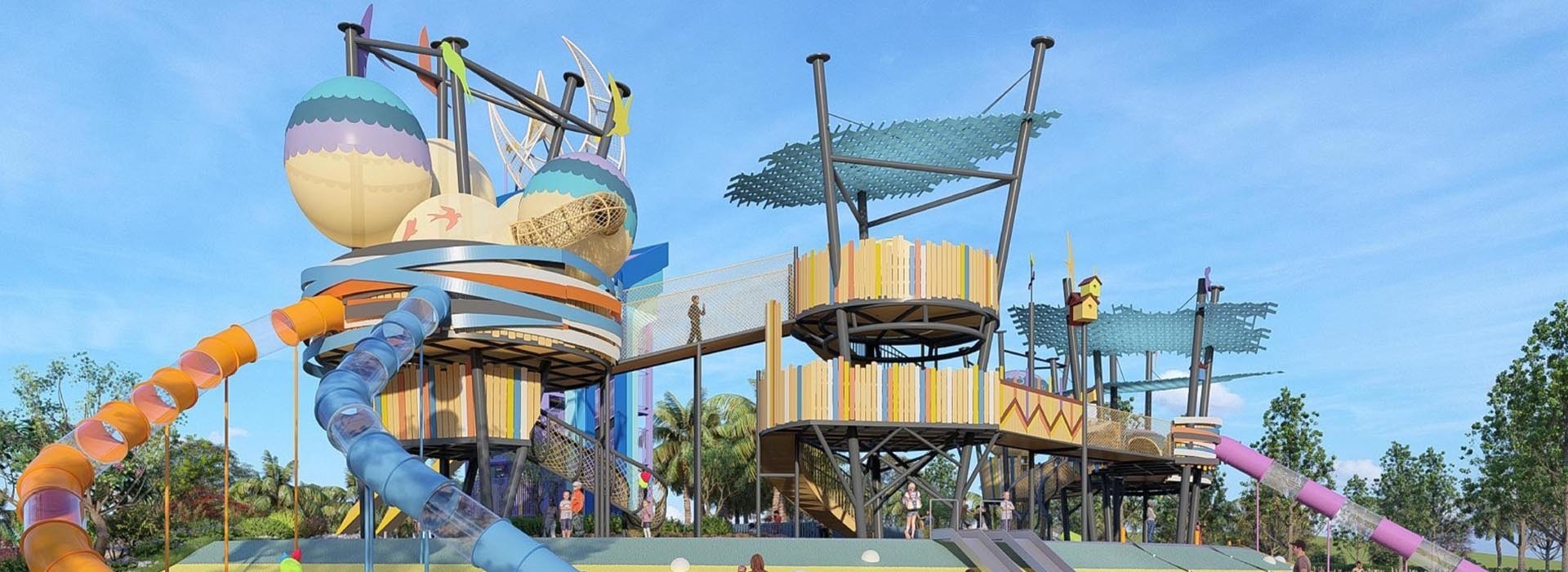
This project is a forest‑adventure play area inspired by the tale of “Treehouse Adventures,” featuring a whimsical log‑style treehouse as its central structure. It is complemented by multiple spiral transparent slides, elevated wooden boardwalks, climbing fences, and terraced pit‑and‑tunnel play spaces, seamlessly connecting with various functional zones such as a Hobbit‑style cottage, a wet‑sand construction area, an activity campsite, and a leisure rest stop. Set against the natural slope and lush greenery, the design creates an immersive forest sanctuary where young children engage in exploratory play—climbing, crawling through tunnels, sliding down slopes, and collaborating with sand to build—while developing physical coordination, courage, and social‑emotional skills, all while sparking their imagination.
A combination of a magical kitchen role‑play area and a nature‑exploration trail: The magical kitchen features log‑style cabinets paired with natural accents like mushrooms and tree stumps, creating an immersive pretend‑cooking setting that encourages young children to simulate the chef’s profession and engage in imaginative role‑play. Meanwhile, the nature trail is designed with stone‑paved paths, lush plantings and flower borders, and interactive nature‑education installations, inviting kids to touch the plants and observe the natural world along the way. Set against a backdrop of unspoiled, organic landscapes, this space fosters both social interaction and communication skills while allowing children to wander and explore nature, achieving a dual focus on enriching everyday experiences and nurturing an early appreciation for the natural world.
Two major nature‑based experience zones: a children’s planting area and an adorable pet playground. The planting area features bordered flowerbeds, thatched pavilions for shade and rest, and log fences, allowing young children to plant greenery themselves and observe crops as they grow. Meanwhile, the pet playground is equipped with multiple wooden animal houses and climbing structures, creating cozy habitats for small animals amid lush lawns and greenery. With natural wood materials and verdant landscaping, the space invites children to care for plants and feed little animals up close, fostering immersive exploration of life’s cycles while introducing them to nature education and the joys of hands‑on work.
This project is an integrated sand-and-water play area that combines three key functions: sand and water play, shaded rest areas, and storage. The site features petal‑shaped shaded pergolas, a shallow wading pool, and a large natural sandpit, complemented by log‑style storage cabinets and wooden manipulative educational toys, all set within a lush, plant‑filled landscape. Young children can engage in hands‑on activities such as digging and splashing, fostering motor coordination, sensory awareness, and collaborative skills while enjoying a nature‑based outdoor classroom.
This pineapple‑elf themed play structure features a towering pineapple as its central motif, topped with lifelike, oversized leaf accents. The main body incorporates a mesh climbing framework, complemented by a transparent spiral slide, elevated wooden walkways, and numerous engaging, educational mini‑games. Set within a natural forest‑inspired environment, the site is enhanced with treehouse installations, meandering pathways, and lush landscaping, creating a vibrant, green oasis. With smooth, well‑designed circulation and thoughtful zoning, the space seamlessly blends climbing, sliding, and exploratory play, crafting an immersive elf‑forest adventure that perfectly suits a nature‑focused children’s activity area.
The Hobbit‑style cottage takes a whimsical, fairy‑tale aesthetic as its design core, featuring earth‑covered, biomimetic structures paired with adorable mushroom‑shaped play equipment. Set against the natural undulating terrain, it weaves together scenic boardwalks, crawl‑through tunnels, and small slides. Surrounded by lush greenery and crisscrossed by winding paths, it serves as both a secret haven for children to play and make friends, and a practical storage space for the park—balancing natural charm with functional utility.
Early childhood space design is child-centered, using professional space design to create a variety of functional classroom solutions for kindergartens. Cultivating children's diverse skills is a characteristic of modern kindergartens and a stimulant for their growth. When functional rooms can bring interest to young children, learning efficiency can be improved. Various skills development should be appropriately enhanced according to the children's acceptance level.

From location to operation one-stop service!
One-to-one in-depth service for different needs, we look forward to cooperating with you!

Contact Us
Contact Phone:8613517090555(Mr. Ma)
Enterprise E-mail:sales@tz-toy.com
Company address: Room 322, Zhengrong Lake Capital Corner Complex Building, 333 Zhenxing Avenue, Liantang Town, Nanchang County, Nanchang City, Jiangxi Province
©2025 Jiangxi Tongzhen Amusement Equipment Co., Ltd. All Rights Reserved